
When you're gearing up for a sod installation project, it's easy to overlook some critical steps that can make or break your success.
From inadequate soil preparation to choosing the wrong type of sod, these missteps can lead to a lackluster lawn.
By understanding the common pitfalls, you can set yourself up for a thriving green space. Let's explore what you should avoid to guarantee your new lawn flourishes.
Before laying your sod, it's essential to prepare the soil properly. Start by removing any debris, rocks, or old grass to create a clean surface.
Next, test your soil's pH and nutrient levels; this helps determine if you need amendments. Loosen the soil to a depth of at least 4 inches, allowing roots to penetrate easily. Incorporate organic matter, like compost, to improve drainage and fertility.
Rake the area smooth, ensuring there are no low spots that could collect water. Finally, water the soil lightly to settle it before installing your sod, ensuring a strong foundation for healthy growth.
Choosing the right sod for your climate and soil type can greatly impact the success of your lawn. Start by evaluating your local climate-warm-season grasses thrive in hotter areas, while cool-season varieties work best in cooler regions.
Next, test your soil to determine its pH and nutrient levels. This information helps you choose sod that'll adapt well. For sandy soils, go for drought-resistant species, whereas clay soils benefit from varieties that tolerate moisture.
Always consider your lawn's sun exposure as well; some grasses require full sun, while others can handle shade. Making informed choices guarantees a healthier, vibrant lawn.
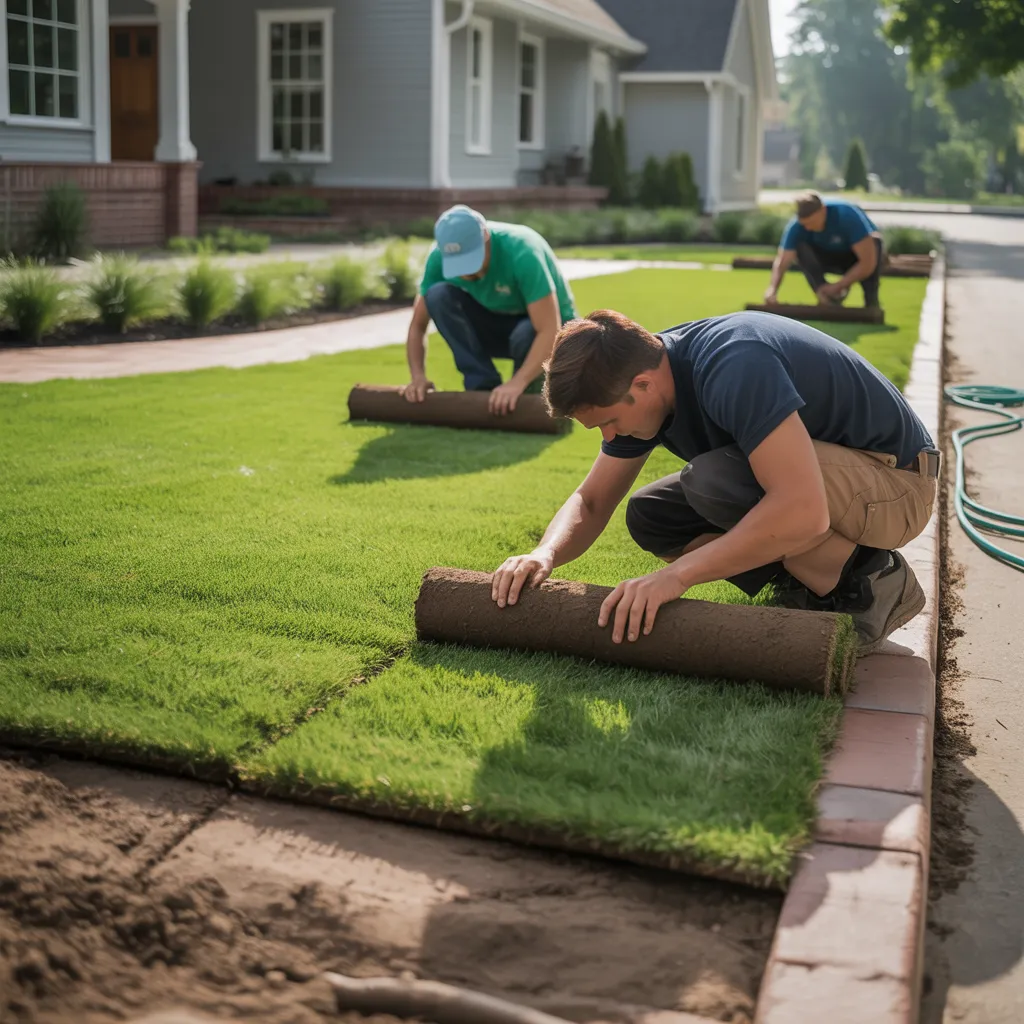
Laying sod can transform your yard, but avoiding common mistakes is crucial for a thriving lawn. First, don't skip soil preparation; a well-aerated and leveled surface promotes healthy roots.
Second, avoid laying sod in extreme temperatures; the best time is during cooler months. Third, make certain you stagger the seams of the sod pieces; this prevents gaps and promotes a seamless look.
Fourth, don't ignore the need for proper alignment; straight lines enhance your lawn's appearance. Finally, resist the urge to walk on fresh sod; give it time to establish before enjoying your beautiful new lawn.
Once you've installed your sod, mastering proper watering techniques is essential for ensuring its success. Start by watering your new sod immediately after installation, soaking it thoroughly.
During the first two weeks, keep the soil consistently moist, watering daily or even twice a day in hot weather. Gradually reduce the frequency after that, shifting to deep watering once or twice a week, allowing the roots to establish.
Always water early in the morning to minimize evaporation. Watch for signs of distress, like browning or wilting, as these indicate adjustments may be necessary. Proper hydration sets the foundation for a thriving lawn!

After you've nailed down the watering routine, keeping your sod healthy and vibrant requires regular maintenance. Mow your lawn regularly, but avoid cutting more than one-third of the grass height at a time.
Fertilize your sod every few months to provide essential nutrients. Aerate the soil at least once a year to improve root growth and water absorption. Keep an eye out for weeds and remove them promptly to prevent competition for nutrients.
Finally, guarantee your lawn has proper drainage to avoid waterlogging. By following these tips, you'll maintain a lush, thriving lawn that enhances your outdoor space.
While nurturing your new lawn, it's critical to recognize the signs of stress that may indicate underlying issues. Yellowing blades, patchy areas, or wilting grass can signal problems like inadequate watering or poor soil quality.
If you notice a spongy texture or excessive weeds, your lawn might be under stress as well. Look for footprints that linger too long-this can mean your grass isn't recovering properly.
Finally, be aware of bare spots, as they often indicate issues with root establishment. Addressing these symptoms promptly will help your lawn thrive and guarantee it's the lush oasis you envision.
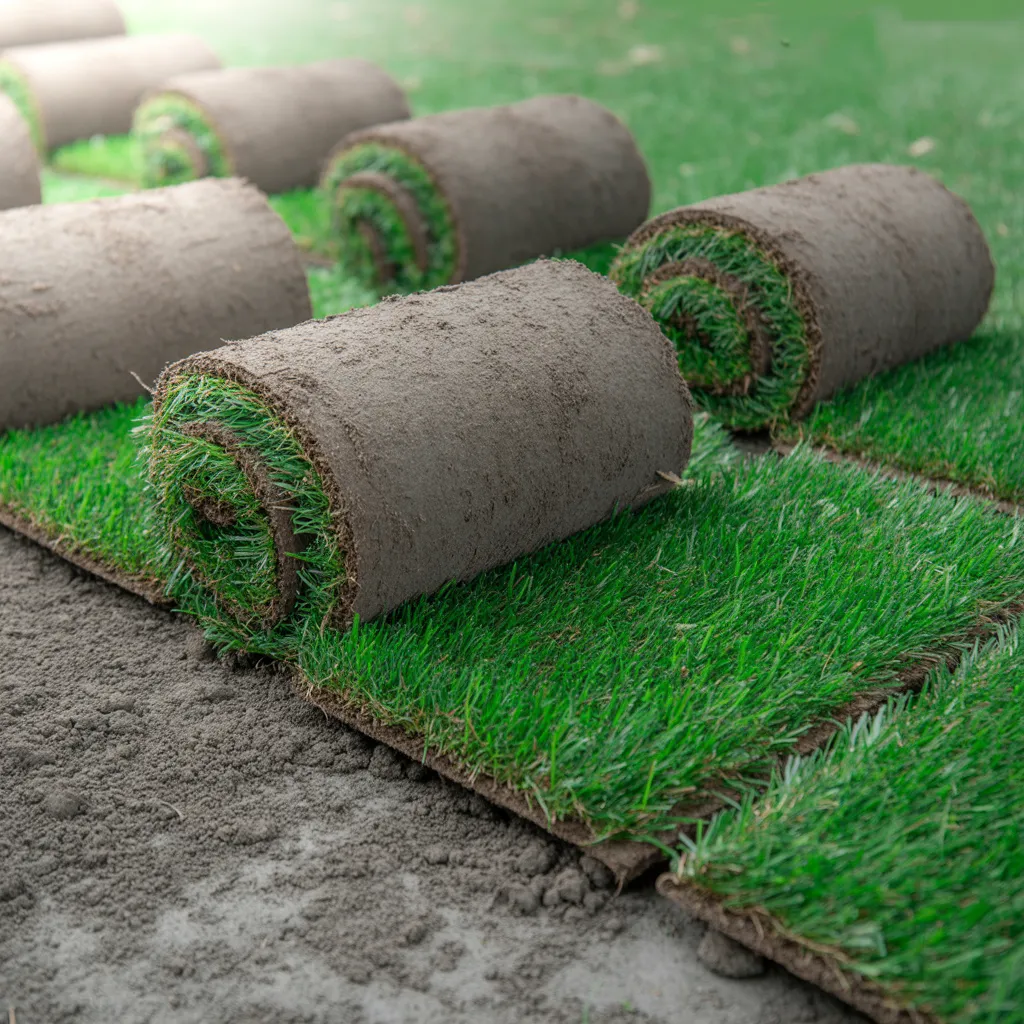
To determine how much sod you need, measure your yard's area in square feet. Multiply the length by the width for a rectangular space. For irregular shapes, break it into smaller sections, calculate each area, and sum them up. Once you have the total square footage, order about 10% extra for waste and irregularities. So if your yard is 1,000 square feet, you'll want to buy roughly 1,100 square feet of sod.
You can install sod in winter, but it�s not ideal. Cold temperatures can slow down root establishment, and frozen ground may make it difficult to lay sod properly. If you do choose to install sod, make sure the grass variety is suitable for your climate and that you�re prepared for potential challenges. Keep the sod moist but avoid overwatering, as frozen soil can lead to drainage issues. Timing is key for success!
Sod typically takes about 2 to 3 weeks to root, but this can vary depending on factors like soil temperature, moisture, and grass type. During this period, you should keep the soil consistently moist to encourage rooting. Avoid heavy foot traffic on the sod until it's established. You can check for root development by gently tugging on a corner; if it resists, the roots are taking hold.